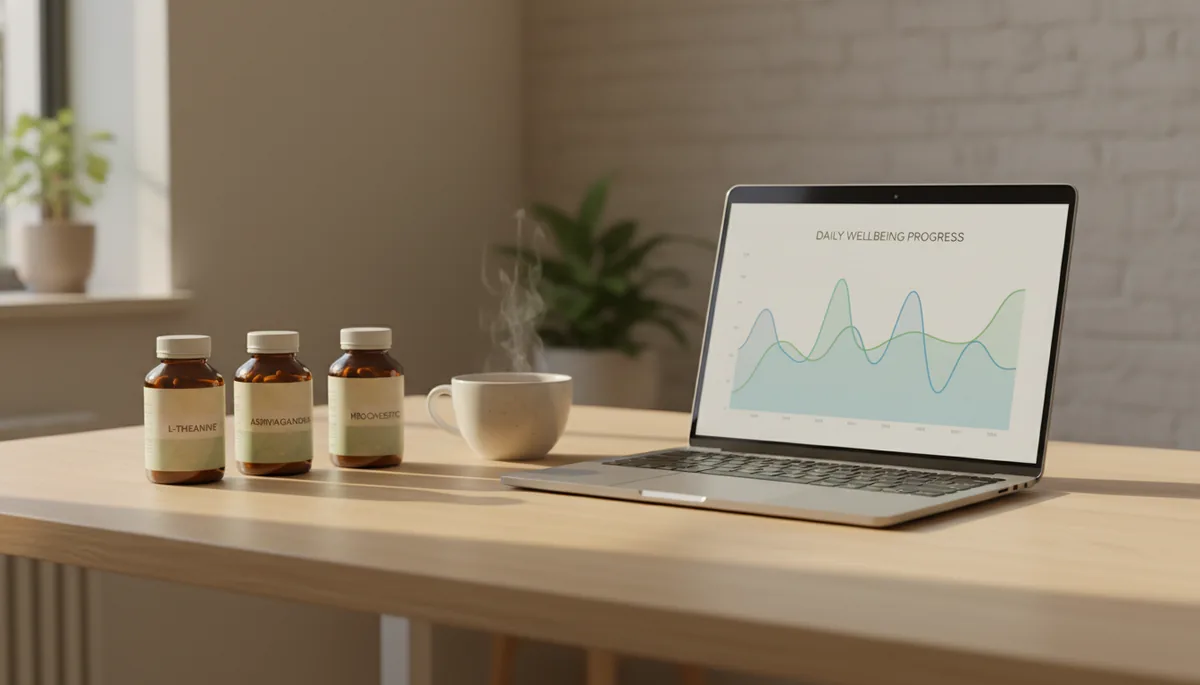
The Science Behind Anxiety Supplements: L-Theanine, Ashwagandha, and Other Daytime-Friendly Options
If you want calmer, clearer days without sedation, a few evidence-backed supplements can help. This guide focuses on daytime-friendly, non-drowsy options (suitable for many vegans) — how they work, what the research says, practical dosing, and safety considerations so you can make informed choices. ⏱️ 6-min read
L-Theanine: Mechanism, evidence, and practical dosing
L-theanine is an amino acid primarily found in tea that promotes a relaxed but alert state. Neurophysiologically it increases alpha brain-wave activity and modulates neurotransmitters such as GABA and glutamate, which helps reduce subjective stress without causing drowsiness.
Clinical studies report reductions in self-reported stress and improvements in sleep quality metrics, and several trials show that when L-theanine is paired with low doses of caffeine it may enhance attention and cognitive performance while blunting caffeine’s jitteriness.
Practical guidance:
- Typical daytime dose: 100–200 mg, once or split (e.g., 100 mg with morning coffee, 100 mg midmorning if needed).
- Common product forms: Suntheanine (patented L-theanine), generic L-theanine powders or capsules (NOW Foods L-Theanine is a widely available example).
- Caffeine interaction: L-theanine pairs well with low-to-moderate caffeine to improve focus and reduce jitters. If you’re sensitive to caffeine, try L-theanine alone first.
- Timing: take in the morning or early afternoon for daytime calm; it typically acts within 30–60 minutes and lasts a few hours.
Ashwagandha for daytime anxiety: Adaptogen effects and dosing
Ashwagandha (Withania somnifera) is an adaptogen whose bioactive withanolides are thought to support stress resilience partly by modulating the HPA axis and lowering cortisol. Multiple randomized controlled trials report reductions in perceived stress and anxiety scores after several weeks of use.
Practical guidance:
- Standardized extracts: Look for clinically studied forms such as KSM-66 (root extract) and Sensoril (root-and-leaf, higher withanolide content). These have more consistent evidence behind them.
- Typical daytime dosing: KSM-66 is often used at 300 mg once or twice daily (total 300–600 mg/day); Sensoril is often dosed lower (125–250 mg/day) because it’s more concentrated.
- Daytime use and side effects: Many people tolerate ashwagandha without sedation; some experience mild GI upset or drowsiness — start with the lower end of dosing and monitor.
- Precautions: Discuss with your clinician if you have thyroid disease (ashwagandha may affect thyroid hormones), autoimmune conditions, or if you are pregnant or breastfeeding — avoid use in pregnancy unless advised otherwise.
Magnesium for anxiety relief: Forms, dosing, and cautions
Magnesium supports neuronal stability and neurotransmission, including NMDA receptor regulation and GABAergic signaling, and low magnesium status is associated with increased anxiety in some studies. Supplementing can be most helpful when intake or blood levels are low.
Practical guidance:
- Preferred forms for daytime tolerance: magnesium glycinate and magnesium malate are well absorbed and generally gentle on the gut; magnesium citrate and oxide are more likely to cause loose stools at higher doses.
- Typical dosing: 200–400 mg elemental magnesium per day is a common target. If using combined with other supplements, account for total elemental magnesium.
- Timing: magnesium can be taken any time; some prefer in the evening for sleep support, but glycinate is suitable during the day for anxiety without strong sedative effects.
- Safety: high doses can cause diarrhea; those with kidney disease should consult a clinician before supplementing. Magnesium can interact with certain medications (e.g., some antibiotics, bisphosphonates) — space doses by a few hours when needed.
Probiotics and the gut-brain axis: Anxiety support from the inside out
The gut microbiome communicates with the brain via immune signaling, neural pathways (vagus nerve), and microbial metabolites. Some probiotic strains show promise in reducing anxiety-related symptoms, although results vary and effects are often strain-specific.
Evidence and practical points:
- Strains with emerging evidence: Lactobacillus rhamnosus GG and Bifidobacterium longum 1714 are examples studied for mood and stress modulation; other multi-strain formulations have also shown benefits in small trials.
- Dosage and duration: typical daily doses range from 1 billion to 10+ billion CFUs depending on the product. Expect to try a product consistently for 4–8 weeks to assess effects.
- Vegan-friendly options: look for probiotic labels that state “vegan” or “dairy-free” and for plant-based capsules. Some companies use vegetarian capsules and clearly label strain origins.
- Variability: individual response varies based on baseline microbiome, diet, and lifestyle. Probiotics are not a guaranteed acute anxiolytic but can be part of a broader gut-focused approach.
Other daytime-adaptogens: Rhodiola rosea and friends
Rhodiola rosea is an adaptogen frequently used for stress resilience and fatigue, and some randomized trials indicate reduced stress-related symptoms and improved mental performance under strain. It’s often chosen for daytime use because it can be stimulating rather than sedating.
Practical guidance:
- Dosing: 200–400 mg daily of a standardized extract (standardization typically targets rosavins and salidroside; a common ratio is ~3% rosavins and 1% salidroside).
- Timing: take in the morning or early afternoon to avoid potential insomnia; some people report mild stimulant-like effects (increased energy or jitteriness) at higher doses.
- Safety and interactions: avoid combining with other strong stimulants; consult a clinician if you take antidepressants (possible interactions with serotonergic agents) or MAO inhibitors, and with bipolar disorder where mood elevation may be a concern.
Non-sedating botanicals for daytime calm: Lemon balm and passionflower
Lemon balm (Melissa officinalis) and passionflower (Passiflora incarnata) are traditional botanicals with calming properties that, at typical doses, are less likely to produce heavy sedation compared with stronger relaxants. Small clinical trials suggest they can reduce mild anxiety and improve sleep-related quality without strong daytime drowsiness.
Practical guidance:
- Lemon balm dosing: extracts commonly used in studies range from 300–600 mg; it’s also used as tea when a milder effect is desired.
- Passionflower dosing: standardized extracts in the range of 250–500 mg have been used in trials for anxiety and sleep support.
- Precautions: both can enhance the effects of other central nervous system depressants (benzodiazepines, certain sleep meds, or alcohol). If you take prescription sedatives or have major medical conditions, consult your clinician before combining.
Safety, integration, and quality: How to use these options responsibly
Supplements can help, but they’re not risk-free. Before starting any new product, discuss it with your healthcare provider — especially if you take prescription medications, have chronic conditions, or are pregnant or breastfeeding. That conversation should include potential interactions (e.g., ashwagandha with thyroid medications, magnesium with certain antibiotics, rhodiola with stimulants or some antidepressants).
Quality and practical tips:
- Choose standardized extracts when evidence supports them (e.g., KSM-66 or Sensoril for ashwagandha; rhodiola standardized to rosavins/salidroside).
- Look for third-party testing (USP, NSF, or other reputable labs) and clear labeling of elemental doses and strain identifiers for probiotics.
- Start with one product at a low-to-moderate dose so you can assess benefit and side effects. Allow several weeks for adaptogens and probiotics to show effects; L-theanine may act more quickly.
- If you follow a vegan diet, check for vegan certification or ingredient lists (capsule material, excipients) and choose brands that explicitly label products as vegan.
When used responsibly — alongside lifestyle strategies like sleep, movement, and stress-management practices — these daytime-friendly, science-based supplements can be useful tools for managing everyday anxiety without unwanted sedation. Track your response, communicate with your clinician, and prioritize reputable products with clear standardization and testing.
Powered by Trafficontent
Leave a Reply